
SPECIAL REPORT
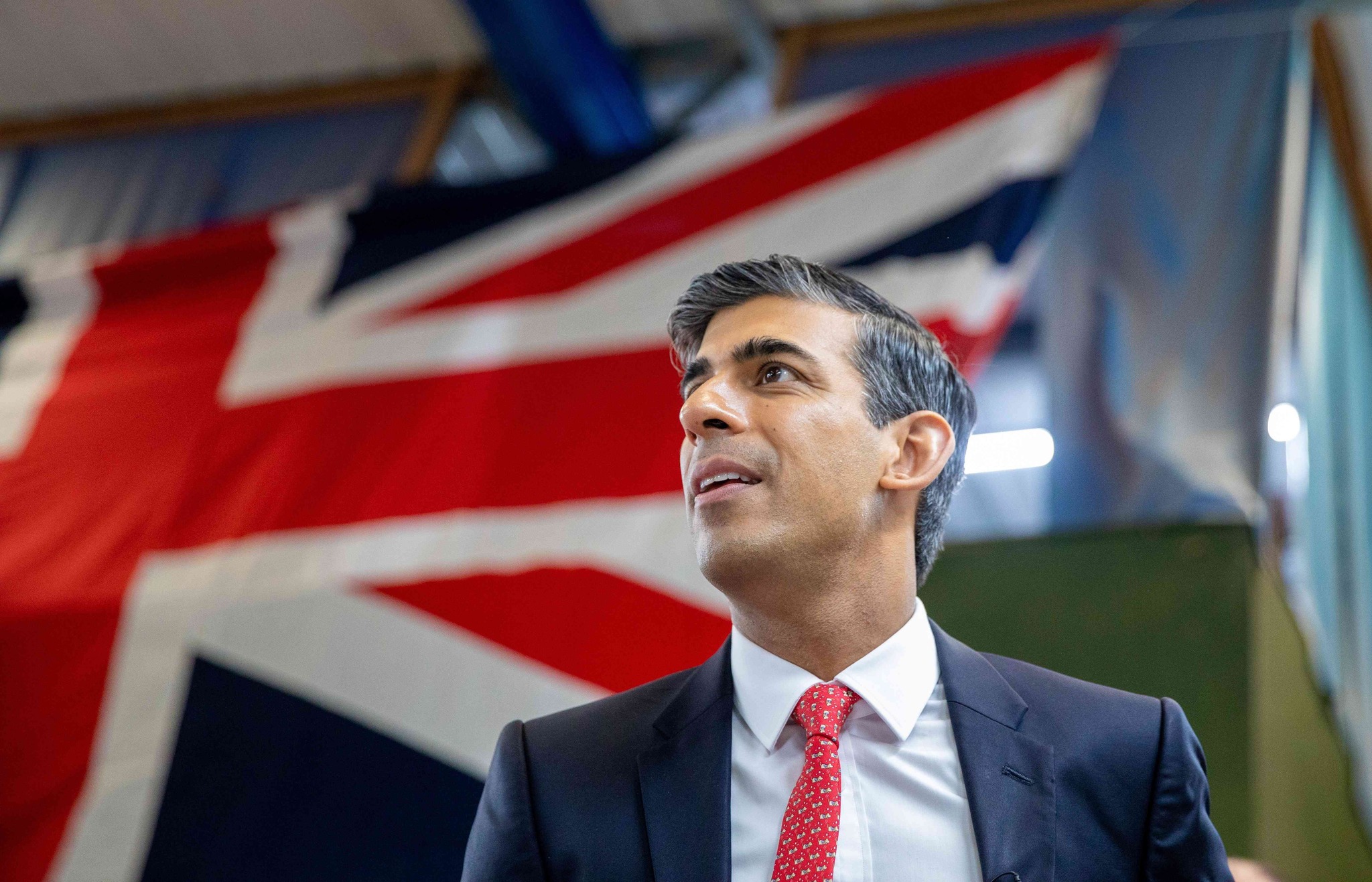
In a BBC Newsnight interview, former PM Rishi Sunak described tech chief executives telling him "flat is the new up" when it came to employee structures. Sunak suggested in the interview that this was a concerning development and called for a rebalancing of the tax system. His solution? Abolishing National Insurance (NI) "over time" and replacing it with taxes on corporate profits, which he argued would be boosted by the productivity gains from AI.
Before getting into whether it's a good idea for political campaigns, we need to look into whether it's even remotely possible. The numbers we are talking about are huge. Unless expressly categorised, tax on corporate profits wouldn’t be coming from just large tech firms, would they? They’d be coming from anyone who structures their business as a limited company.
In 2025-26, National Insurance Contributions are estimated to raise £205.4 billion. That's the second biggest source of government revenue after income tax, equivalent to around £7,150 per household and 6.7% of national income. Employer NI accounts for the lion's share of that. In 2023/24, NICs raised £179 billion, and 60.5% came from employer NICs alone.
That's well over £100 billion a year from employer contributions. Scrapping it entirely would leave a crater in public finances that makes every recent Budget row look like a pothole.
To put this into perspective, the employer NI increases Rachel Reeves introduced — just a rate rise from 13.8% to 15% and a lower earnings threshold — were estimated to raise an additional £23.8 billion a year, and were described as the biggest single tax increase in the Budget. Abolishing the whole thing entirely would need replacing pound for pound.
What Sunak actually proposed
To be fair, Sunak wasn't suggesting ripping it out overnight. The BBC article notes he suggested abolishing NI "over time" and replacing it with higher taxes on corporate profits — on the basis that AI-boosted companies would be generating far more profit, so you'd tax the gain rather than penalise the act of hiring someone.
It's not an absurd idea in principle. Taxing employment does, logically, discourage employment. Taxing profits is more neutral — a company pays more when it earns more, rather than when it takes someone on. Research shows that employer NI affects businesses based on employment size rather than profitability, which can disproportionately harm labour-intensive firms even when they're not particularly profitable.
Would a future Chancellor actually do it?
We can’t see it happening, and here's why:
The revenue gap is enormous. NI receipts are used to fund the state pension, the NHS, and other contributory benefits, which are paid into a separate National Insurance Fund and kept apart from general taxation. You can't quietly retire employer NI without explaining to the public how their pension and NHS are being funded instead.
UPDATED clarification: For the most part, this is correct; however, the money is split between the NHS and the National Insurance Fund (NIF).
The NHS allocation usually accounts for about 20% of the total NI collected, though the majority of NHS funding still comes from general taxation (Income Tax and VAT).
GOV: “National Insurance Fund (NIF) holds National Insurance Contributions (NICs), paid by employees, employers, and the self-employed. Voluntary contributions are also paid into the Fund. Receipts paid into the NIF are kept separate from all other revenue raised by national taxes and are mainly used to pay social security benefits, such as contributory benefits and the State Pension.
“The NIF Account presents the receipts and payments for the financial year, as well as the balance on the Fund at the end of the year.
“NICs also help to finance the National Health Service (NHS). NICs are paid into the NIF net of money allocated to the NHS.”
Large profitable corporations can move jurisdiction if they don’t like the corporate tax policies. If a Treasury can’t tax corporations, they will have to tax the next best thing: the self-employed.
Plus, whoever is running Number 10 Downing Street in the next election will be inheriting what the current government has implemented. For example, the chancellor froze employer National Insurance thresholds until April 2031. Labour just banked billions from raising employer NI, so the idea that they or any near-future successor would then abolish it entirely is, at present, fanciful.
Could there be more targeted ways to get a similar effect? Employees aged under 21 and apprentices aged under 25 are already exempt from employer NI, so expanding that kind of targeted exemption is far more deliverable than abolition.
Replacing Employer NI with Corporate Tax: wait, that could include freelancers
Here is where Sunak's proposal gets complicated and where the self-employed get caught in the crossfire.
The idea sounds clean enough. AI makes companies more profitable, so tax those profits instead of penalising hiring. But the UK already has a significant and growing population of people working for themselves through limited companies — around 4.2 million people now working for themselves in the UK.
If corporate tax goes up meaningfully to fill the NI-shaped hole, these people take a direct hit, precisely at the moment when more young workers are being pushed into self-employment because permanent jobs are drying up.
This is the vicious circle hiding inside Sunak's proposal, and it's worth spelling out.
The self-employment squeeze is already happening
Many freelancers and contractors operate through their own limited companies because they want to protect their family home. Others go this route because clients say they won’t hire them otherwise due to limited liability. Plus, a structure that lets them pay themselves a modest salary topped up with dividends, and offset legitimate business costs against corporation tax.
It's not a loophole; it reflects the genuine risk and costs of working for yourself rather than having an employer. But it does mean that corporation tax directly affects their take-home pay.
Freelancers are already dealing with successive increases in dividend taxes, including a 2-percentage-point hike from April 2026 and the effects of increased employers' NI from April 2025, which has also reduced clients' budgets available for hiring freelancers.
That last point is important. Higher employer NI doesn't just affect permanent staff. When companies' hiring budgets get squeezed, the first thing many cut is contractor spend too.
The dividend basic rate has risen from 8.75% to 10.75%, and the higher rate from 33.75% to 35.75% from April 2026, hitting the 1.2 million owners of the UK's smallest companies particularly hard, with frozen personal allowances adding further financial pressure and risking discouraging entrepreneurship at a time when it is most needed.
Therefore, before we even get to Sunak's proposed additional corporate tax hike, the self-employed are already being squeezed from multiple directions simultaneously.
IR35: the system designed to make freelancing harder
Then there's IR35, the legislation that determines whether a freelancer working through their own limited company is genuinely self-employed or a "disguised employee." If HMRC decides you're the latter, you get taxed like an employee but without any of the rights: no sick pay, no holiday entitlement, none of it.
Being caught inside IR35 affects take-home pay by up to 25% through additional National Insurance and loss of expense deductions.
According to HMRC's figures, around 120,000 individuals who were providing services through their own limited companies were "likely to have been affected" by extending the reforms to the private sector in April 2021. However, those companies serving contractors have estimated a much higher figure.
The legislation's complexity has compelled nervous companies to simply blanket-classify all contractors as inside IR35 to avoid any risk, regardless of the actual working relationship, with a survey of over 900 contractors finding that more than two in five believed they had been subject to blanket IR35 determinations.
Perceived IR35 risk still prevails in 2026, despite changes in legislation. In a LinkedIn post, just this week, Dave Chaplin of IR35 Shield said:
Most recruiters wrongly consider IR35 as a major risk in their contractor model.
After April 2021, umbrellas felt like the safest response, given that clients were understandably nervous. Moving contractors to an umbrella reduced exposure at that time.
But that position has now changed.
We now know that where businesses invested in disciplined IR35 status processes, IR35 exposure was mitigated and became predictable. Further, a rule fix in April 2024 dramatically reduced tax risk to a fraction of the overall contingent spend. And legal clarity was restored by a Supreme Court ruling.
On the flip side, from April 2026, umbrellas present more risk than IR35. When one fails, it is systemic; and strict liability, with no defence, sits with the recruiter.
Many firms are still optimising for the fear they felt in 2021 and using a model that presents more risk today.
Now layer on Sunak's proposal: raise corporate taxes further to replace employer NI revenue. A contractor outside IR35 may look like one of the lucky ones who's managed to demonstrate genuine self-employment; however, their limited company profits and dividends would be axed more heavily, and still without employment rights. Meanwhile, the permanent job they might have preferred simply doesn't exist, because the company went AI-first and flat.

Young people are being crowded out
Sunak is rightly worried about young people being locked out of employment by AI-driven flat structures. His solution is to reduce the cost of employment (scrap employer NI) and raise taxes on corporate profits instead. But as more people are forced into freelancing precisely because companies aren't hiring, a trend already well underway, raising corporate tax hits the very people who had no other option. It doesn't just fail to solve the problem; it actively punishes those most affected by it.
Vacancies for graduate jobs, apprenticeships, internships, and junior jobs with no degree requirement have dropped 32% since November 2022. Some of those people will retrain. Some will wait it out. But a growing number will set up as freelancers or sole traders, often working for the very companies that declined to employ them permanently. Raising the tax burden on that route at the same time as closing off the permanent employment route will hit people when they're already down.
The flat structure problem: Would scrapping Employer NI even help with hiring?
Sunak's argument has a snag in it. The whole premise is to make hiring cheaper so companies hire more people. Simple enough logic. But it misses what's actually happening in organisations that have gone AI-first.
If chief executives are telling Sunak "flat is the new up", meaning they expect to grow revenues without growing headcount, then making those fewer hires marginally cheaper on NI doesn't change the underlying decision.
For example, if a law firm has worked out that it can do the work of 30 junior associates using 8 senior partners and an AI system, cutting the employer NI on those 8 people doesn't suddenly make them want 30 again. The decision to stay flat isn't primarily about cost; it's about whether the additional person adds more value than the AI already covering their role. If the answer is no, even "free employment" wouldn't shift the dial much since pension contributions still would have to be factored in.
There's also a fairness issue buried here. The companies most capable of going AI-flat would be well-funded and profitable tech-adjacent firms, such as professional services and financial institutions. An employer NI cut would deliver them a windfall on their existing, deliberately small headcounts, while doing relatively little to encourage them to hire more. The firms that would respond to cheaper hiring, such as labour-intensive businesses including hospitality, care, and retail, often aren't the ones going AI-centric in the first place.
What’s the solution to future job creation?
If flat genuinely is the new up, the government policy must work with the reality of growing self-employment, not against it.
Targeted NI exemptions for new and early-career hires
Rather than abolishing employer NI wholesale, make it dynamic. A time-limited NI holiday. For example, zero employer NI for the first 12 or 24 months of any new hire under 25 would directly incentivise the creation of new jobs rather than subsidising existing ones. It's affordable, targeted, and addresses the specific cohort Sunak is worried about. The existing exemptions for under-21s and apprentices under 25 show this mechanism already works; it just needs expanding.
Reform IR35 to make genuine self-employment viable
If flat org structures are here to stay, the answer may be to make that model work for workers, not just for companies. Right now, being a legitimate freelancer in the UK involves IR35 complexity, dividend tax hikes, frozen allowances, and the constant threat of being reclassified as a disguised employee (without any of the employment protections that status would bring).
A serious government would strip IR35 back to its original purpose: catching people who genuinely never left their employer on Friday and came back Monday. It was never designed to punish someone who has multiple clients, genuine business risk, and builds skills across sectors.
The fundamental challenges with IR35 remain, continuing to impede the flexibility of Britain's independent workforce and forcing contractors into suboptimal quasi-employment models. Fix that, and you make self-employment a genuine first-class career choice rather than a precarious fallback for people who couldn't get a permanent job.
Reform corporate tax, but protect the smallest companies
If raising corporate tax is on the table to replace employer NI revenue, the rate structure matters enormously. The UK already applies a small companies rate of 19% on profits below £50,000, rising to 25% above £250,000. Any increase in the main rate to compensate for lost employer NI revenue should preserve and ideally expand this small profits rate, so that a one-person limited company set up by a newly self-employed graduate pays a meaningfully lower rate than a large corporation benefiting from AI at scale. Hitting them with the same rate increase would be deeply counterproductive.
Tax AI deployment as a business input
If the problem is that a human employee attracts 15% employer NI while an AI agent costs nothing beyond a software subscription, you could narrow that gap directly. A modest, hypothecated levy on commercial AI tools used to perform functions previously carried out by employees could be ring-fenced for workforce transition and skills support. That would offer a level playing field without blowing a hole in NI revenues. It's politically tricky, but economically coherent. If you want to tip the scales, as Sunak puts it, you need to actually move them.
Redesign the Apprenticeship Levy for AI-era roles
The Apprenticeship Levy, paid by employers and even some umbrella company workers, is supposedly used to fund training. However, it has had a poor record of being used effectively. It could be redesigned to specifically fund structured early-career roles built around human-AI collaboration: prompt engineers, AI output auditors, data quality reviewers, AI ethics associates. These are genuinely new jobs. They require people. Right now, there is no clear pathway into them for a 21-year-old graduate.
The young graduate who can't get a permanent job at the flat-structured law firm, sets up as a freelance legal researcher, and operates through a one-person limited company, would face higher corporation tax, higher dividend tax, IR35 anxiety, and still no employment rights.
Flat may be the new up. But that is an argument for building better, fairer ladders into work. Whether that's a job, a contract, or a business of your own. Not for taxing the very rungs people are desperately trying to climb to make a living.



2 comments
Katherine Steiner-Dicks · 6 May 2026
"XY": For the most part this is correct, however, the money is split between the NHS and the National Insurance Fund (NIF).
The NHS allocation usually accounts for about 20% of the total NI collected, though the majority of NHS funding still comes from general taxation (Income Tax and VAT).
Gov source: “National Insurance Fund (NIF) holds National Insurance Contributions (NICs), paid by employees, employers, and the self-employed. Voluntary contributions are also paid into the Fund. Receipts paid into the NIF are kept separate from all other revenue raised by national taxes and are mainly used to pay social security benefits such as contributory benefits and the State Pension.
“The NIF Account presents the receipts and payments for the financial year, as well as the balance on the Fund at the end of the year.
“NICs also help to finance the National Health Service (NHS). NICs are paid into the NIF net of money allocated to the NHS.”
You must also read this article as what has been proposed by Sunak and the article questions this line of thinking. The IR35 experts represent contractors in legal cases and worker status determinations, hence are IR35 experts. Do they commercially benefit from this expertise? Yes, but so do lawyers.
xy · 6 May 2026
Very poor understanding in this article.
"NI receipts are used to fund the state pension, the NHS, and other contributory benefits, which are paid into a separate National Insurance Fund and kept apart from general taxation".
No, they are not. Pensions are not funded from specific pots. Nor is Employers NI as such the source of pension payments - all govt receipts do that.
Reducing ER NI would increase head counts in businesses you didn't consider - offshored (non-UK) labour is an issue, the biggest driver is that in, say, India you don't have to pay 15% of a UK salary in additional employment costs.
Abnd please stop quoting the witterings of people with vested interests in IR35 as "experts". Anyone providing insurances etc against IR35 risks has an interest in IR35 surviving - asking them anything to do with repeal is just plain silly.
Sign in to comment